Tuesday, August 9, 2016

Home in the Afterlife


With the recent passing of my father, I have been thinking a lot about his funeral and how burials were done in Ancient Egyptian times. The afterlife was something that the Egyptians held to high regard. Pyramids were built as homes for the dead to assure comfort in the afterlife. 
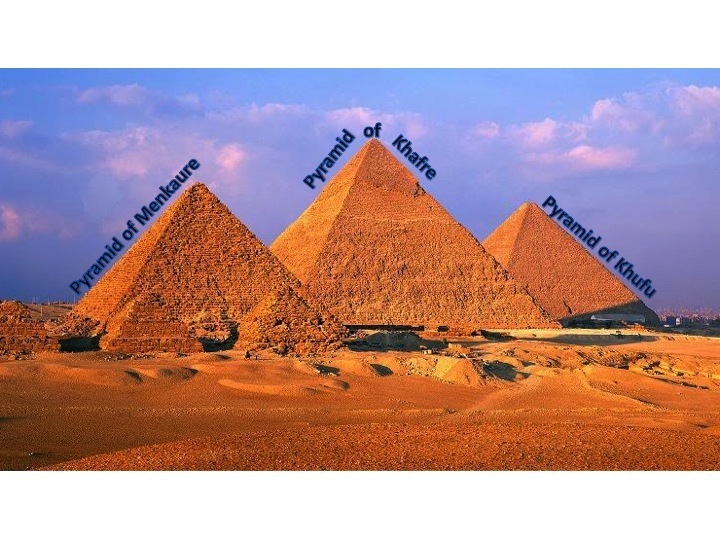
 The most elaborate homes for the dead were reserved for royalty and members of the aristocracy. One of the most famous pyramids is The Great Pyramid of Khufu which is a part of the burial complex at Gizeh. It was constructed for the second ruler of the fourth dynasty, Pharaoh Khufu, aka Cheops. The Great Pyramid of Khufu stands at approximately 480 feet tall and consist of more than two million stone blocks. The base of the pyramid covers a base area of 13 acres. Talk about a massive structure. 

Inside the pyramid is a royal burial vault which was prepared as home for eternity. Its chambers were filled with priceless jewelry , weapons, and furniture in an attempt to prepare the dead for the afterlife. The walls of the chamber were also decorated with paintings from colored pigments or carvings of sacred rituals and daily activities. Just the mention of such decorations, chambers, and burial vaults make me think of mausoleums in today's cemeteries. Perhaps this idea came from the royal chambers hidden within the pyramids of Ancient Egypt.


We did not choose to place my father in a mausoleum. We did what is consider a standard burial in today's society. The were no walls to decorate, but his casket had elaborate details all around. There will not be a pyramid of millions of stones place over his grave, but we did choose a headstone that will forever mark his place for eternal rest. I believe the preparations that we took sent him into the afterlife well prepared just as the Egyptians did for their pharaohs so long ago.  

Tuesday, August 2, 2016

Anciet Philistine Cemetery Discovered


I found this article about an ancient Philistine cemetery that was discovered recently. After more than 30 years, a team of archaeologists believe they found a cemetery belonging to the ancient people on the outskirts of Ashkelon in Israel. I hope this intrigues you as much as it has me. The link is here! Enjoy!!

Buddha's Message


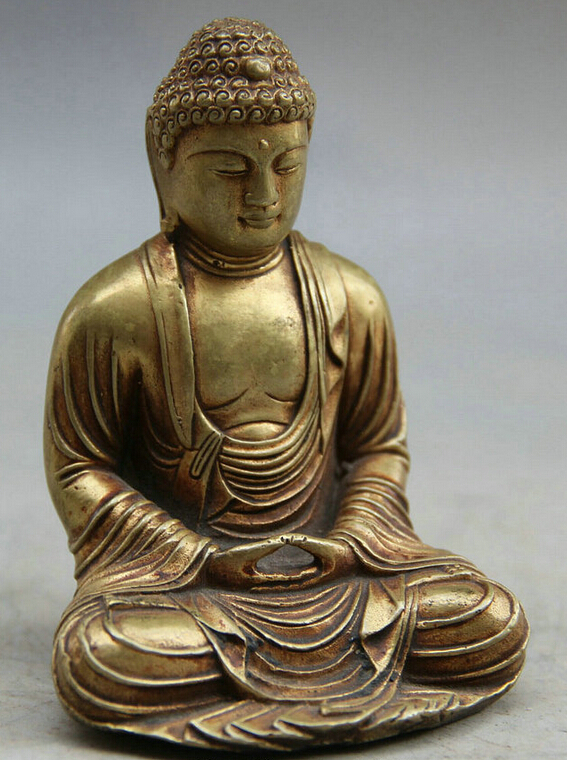
I use to see this figure in different and various places and wonder what exactly it was. I remember going with my dad to one of those stores that sold the statues for your yard and there it was again. It wasn't until I got older that I found out it is called a Buddha. 

Buddha, which means the enlightened one, is the name given to Siddhartha Gautama who lived in India some three to five thousand years ago. He was born to a princely Hindu family and was well educated and protected from the experience of pain and suffering. At the age of twenty-nine, Siddhartha renounced his wealth, abandoned his wife and child and began the quest for inner illumination. For the next forty years, Buddha taught the message of humility and compassion until is death at the age of eighty.

Buddha's message is still one that resonates with many believers and followers. In one of his earliest sermons he spoke about the Four Noble Truths:

1. Pain is universal 
2. Desire causes pain
3. Ceasing to desire relieves pain
4. Right conduct leads to release from pain.

The Buddha was an eloquent teacher whose concerns were ethical and democratic. He encouraged the destruction of worldly desires and the renunciation of material wealth. He emphasized modesty, moderation, and compassion and spoke highly of insight, knowledge, and the distinction of "Self." Below is a quote from the great Buddha. May it help you along your way.


The Skill of Visual Art Analysis

Have you ever looked at a picture and wondered what the artist was thinking when he/she painted it? Did you notice the tones of the colors? Perhaps, you noticed the direction of the paint strokes? If you answered yes to any of these question, then you have done your own visual art analysis.

 Visual analysis is used to identify and comprehend the approach the artist made in creating the piece of art. The analysis is also used to address an artwork's formal elements such as texture, lines, color, and size. By gaining an understanding of the separate parts of the art piece, you can come to a better understanding of the piece of art as a whole. Take a moment and analyze the picture below. Look for lines, textures and color.
 

This video clip further breaks down the fundamentals of art analysis. It is not only a great cultural benefit, but it can also be very helpful in your career. During a visual analysis, you must look closely at the art and translate your observation into written claim. Consider these three guidelines when completing an analysis: 1) Observe the artwork and make note of what you see, 2) Formulate a main claim, and 3) Support your claim with details. These guidelines will help you to precisely pick out all the elements necessary to complete a thorough visual art analysis and may also aid in analyzing other situations in life.

Monday, August 1, 2016

Plato's Allegory of the Cave

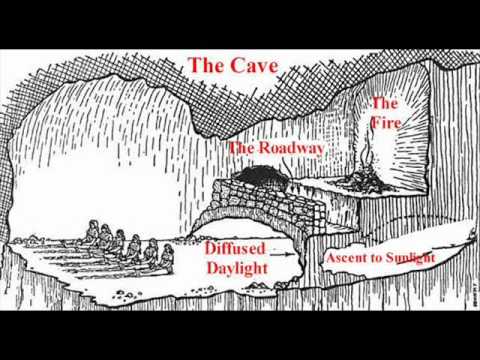
Image result for plato  Plato, a student of Socrates and a philosopher, gained a great amount of inspiration from his teacher. After the death of Socrates, Plato founded the first school of philosophy and began writing, mostly using the dialogue of Socrates. One of his most famous works came from the seventh book of his masterpiece The Republic. In this piece Plato challenged the psyche and set out to compare the effect of education and the lack of education in society. In other words, he used the literal meaning of the shadows and darkness to imply the figurative meaning of ignorance, ego, and self-education.

The Allegory of the Cave set out to test the theory of truth, justice, and beauty. For me, it teaches me that you can not give such concepts one set definition. Beauty should not be defined only by society and its norms. Education is not merely contained in the classroom. Justice and truth do not just have one verdict. Nothing is really what you are told it is or only what you see. Instead, everything can have multiple meanings or interpretations without ever disturbing the original concept. In other words, experience is the best teacher. Never be afraid to experience things for yourself. Never be afraid to challenge someone's ideas. It may be the best thing you ever do for your psyche.

Like in Plato's writing, the people in the cave only knew of the shadows they saw. Those shadows, however, did not take away from the reality of the objects on the outside of the cave. The prisoner who was liberated was able to get a different look at things and see for himself that everything he thought was real, was merely a reflection of something even more tangible. When is the last time you challenged your mind to think deeper about reality? Give it a try today.


Christianity- A Religion, A Belief, A Lifestyle

Image result for christianity


So often, people are born into a religion and don't get to choose it for themselves. They are raised according to beliefs that their parents or families believe. Christianity is one of those religions. I was raised to believe in Jesus Christ, the son of God, who was born in the human form to save souls and preach the message of his father, God. At first, everything that I believed was because I was told to. It was when I truly set out to find understanding and meaning for myself that I lived in and excepted my title "Christian." 

Christianity is the monotheistic religion based on the teachings of Jesus Christ, the son of God. It is also said to be the largest religion with over 2 million followers. Christianity was legalized in 313 A.D. after the Roman Empire was converted to the Holy Roman Empire. Through Christianity, Jesus taught the message of love and compassion. He warned the people of Jerusalem of the perils of wealth and the temptations of the world. Jesus stressed the message of faith and gave instructions to his followers on how to achieve salvation. These teachings became known as "the Gospels" and were recorded by the apostles Matthew, Mark, Luke, and John. 

Today, there are many religions and beliefs that people choose to adapt. I choose Christianity. Some people have asked me my do I believe the in the Christianity. I believe in love and compassion. I choose to love others and treat people as I would want them to treat me. I see signs of temptations and sin all around me in everyday life, and it directly relates to things I have been taught through my religion. I choose to follow the teachings of God so that I may achieve salvation one day. I believe in the trinity:  God the father, God the son, and the Holy Spirit. I can only hope that one day I too shall find rest in the kingdom of God. 

A New Republic

I took a trip with my humanities class to the Virginia Museum of Fine Arts (VMFA). Our intention was to go and see Greek art and other art that correlated with our lesson. However, all I could think about was the Kehinde Wiley exhibit that was opening that day. I wanted so bad so see his work up close and personal. That mission was accomplished, plus more! 


Kehinde Wiley is a Los Angeles born artist whose paintings often challenge the boundaries between traditional and contemporary representation. Wiley often uses old masterpieces to influence and produce art that places people of color in heroic positions and poses. His art is controversial and makes you challenge the way you think; at least for me it did. He not only does paintings, but he is also a sculptor. I enjoyed many of his paintings, however, my favorite piece at the exhibit would have to be a sculpture of three African-American women whose hair was woven together. The name of the piece is "Bound."


"Bound" (2014) Kehinde Wiley


 At first glance, it just looks like their braids are connected, hence the name "Bound." After I took the time to look closer at the piece, more intricate details began to pop out. I was moved by the detail put into the piece. I began to feel the pain of being bound by society's thoughts and judgments. I could see sadness and misery. I also felt power and strength. This piece moved me to tears! I can only hope that this small reflection makes you want to visit the exhibit and draw you own conclusion from the art the being displayed. You can find more information about the VA exhibit here.

A closer look at the BOUND sculpture